How Automotive Casting Suppliers Support ESG and Emissions Reporting
Emissions reporting across the automotive supply chain has evolved from being an emerging trend, initially adopted by a few manufacturers, to a compliance necessity which can offer significant competitive advantages when done right.
Both OEMs and Tier 1s are under increasing pressure to provide full carbon dioxide equivalent (CO2e) visibility across their entire supply chain, with even greater focus on Scope 3 emissions.
For these manufacturers, their Environmental, Social, Governance (ESG) strategies include deep examination of automotive supply chain sustainability, including material sourcing and supplier processes.
Today, reporting on environmental impact goes beyond what the manufacturer does and now includes how their suppliers operate, too.
Here, we explore all the ways that modern casting and machining suppliers, such as BCW Engineering, help OEMs and Tier 1s with their ESG targets and what procurement teams should look for when selecting a new partner.
What is ESG and Why Does It Matter in Automotive Supply Chains
ESG stands for Environmental, Social, and Governance and is a set of standards that measures a business’s impact on society, the environment, and how transparent it is.
In a manufacturing context, ESG’s main focus is on carbon footprints, ethical sourcing, and compliance with important sustainability legislation. Even the most ordinary of automotive supply chains is a complex, multi-layered entity which spans the globe and can include dozens of partners playing their part to create the final product.
And, while this complexity results in the automotive world we know today, it also makes ESG tracking two things:
- Difficult,
- And really important
Where once it might have been a box-ticking exercise aimed to improve brand reputation, ESG is now an essential part of a Tier 1 or OEM’s business operations.
A combination of government legislation and societal pressure to mitigate environmental impact has resulted in poor ESG compliance costing companies contracts and procurement decisions.
A majority of emissions output for a manufacturer actually comes from places that are outside of their control. These are called Scope 3 emissions (more on that in the next section) and account for the majority of a vehicle’s carbon footprint.
An increased scrutiny on these Scope 3 emissions has had the knock-on effect for manufacturers during the supplier procurement process. There now needs to be greater consideration about whether suppliers can provide traceable carbon data and show proactive CO2e reduction initiatives.
This has put casting and machining suppliers in the spotlight for their energy usage as OEMs move toward net-zero automotive targets.
What is Scope 3 Emissions Reporting and Why Is It Crucial in Casting
Scope 3 emissions cover all the indirect emissions in a manufacturer’s supply chain. Scope 1 covers output that is a direct result of manufacturing activity, and Scope 2 focuses on the emissions from energy used to run a building. This third scope was introduced to ensure manufacturers were thinking about their impact beyond the factory walls.
The need to report on these emissions means procurement leads must work with suppliers that have the reporting capabilities and are willing to measure these emissions.
Casting is an important part of the manufacturing process and is also an incredibly energy-intensive process, with the emissions levels differing based on materials, methods, and recycling rates.
Naturally, failure to provide accurate reporting on this process can see OEM’s and Tier 1’s risk non-compliance with EU Carbon Legislation through no fault of their own, hence the greater emphasis placed on the supplier’s ability to provide rigorous carbon data.
Suppliers such as BCW Engineering include lifecycle assessment and emission monitoring throughout the process. Reporting on the carbon emissions of the casting process and handing this data to partners is made far easier by embedding it at every stage.
The key to accurate emissions reporting is automation. Retroactively attempting to report on carbon emissions in the casting process will never be as accurate as automotive data capture in real time.
How Can Automotive Casting Suppliers Support ESG Strategies
A true, forward-thinking automotive casting supplier will do more than just make the necessary parts required. They’ll act as a partner that will actively look to help you achieve ESG goals.
Whether it’s the materials selected or the machining process used, by integrating sustainability at every stage of their process, suppliers de-risk manufacturers’ ESG reporting. As well as that, new die casting practices are now used by sustainable suppliers to further bring down CO2e per part, machining processes are including adaptive tool paths that reduce unnecessary movements.
Another way to support manufacturers is to do something that BCW Engineering does – closed-loop recycling. Any material not used is recycled under the same roof as the casting process and then fed back into the cycle without sacrificing material quality or traceability.
While closed-loop recycling promotes sustainability at the end of a typical casting process, in-process digital monitoring of machinery also plays a critical role. All this results in fully traceable workflows that make the procurement team’s lives easier because tracked emissions can be viewed from raw materials to delivery.
All in all, manufacturers that choose vertically integrated suppliers can simplify their ESG reporting by only having to view a single data set that covers multiple stages of the casting process from one partner.
The Seven Questions Procurement Teams Should Be Asking Casting Suppliers
When thinking about supplier choice, procurement teams have to factor in a lot of aspects, including ESG. And when these decisions have huge financial and reputational consequences, it can be difficult to know how to distil all this into concise questions that will get you the answers needed to make an informed choice.
We’ve provided you with the seven essential questions that need to be answered in full by any supplier wishing to work with you.
- Can you provide traceable CO2e data for each part produced, including material source and processing energy?
- What systems do you use to monitor and report on emissions across your operations?
- How do you manage Scope 3 emissions in your supply chain?
- Are your casting and machining processes aligned with recognised sustainability certifications such as ISO 14001?
- Do you use recycled materials or operate closed-loop systems for metals like aluminium?
- How is automation, tooling, and process consolidation reducing your emissions?
- What digital tools do you use to support emissions tracking and ESG audits?
Why Vertically Integrated Suppliers Are a Game Changer for ESG Compliance
A vertically integrated supplier brings a whole range of benefits to manufacturers, not least for their ESG compliance, and supports long-term industry shifts. That’s before you even consider the machining and design for manufacturing capabilities.
Working with a supplier that completes entire processes all under one roof reduces data complexities, delays in emissions reporting, and minimises data gaps.
Working with one supplier means having to handle just one audit trail and not chase Scope 3 data across multiple vendors. BCW operates a single-source approach that ensures compliance is met and lifecycles are assessed accurately. With one supplier, parts do not need to be moved around as much, and the wider logistics of getting a part onto the production line are also reduced.
Multiple vendors come with the added danger that one of them may not meet the levels of emissions reporting required, increasing the ESG risk for large manufacturers.
One supplier gives procurement teams what they need, which is ease of reporting and confidence that they’re doing their bit to meet the manufacturer’s ESG goals. By working closely with a vertically integrated supplier, OEM’s and Tier 1’s can leverage proactive problem-solving and collaborative CO2e reduction initiatives.
How Smart Casting Processes Reduce Emissions and Complexity
As well as everything mentioned so far, the actual process of casting can play a significant part in reducing emissions. While accurate reporting is welcome, if the processes that are being reported remain inefficient, that data will only highlight issues. Reports that expose excessive waste will simply trigger supplier reassessment.
Part consolidation is one of the ways to make processes more efficient. This method combines multiple components into a single casting, reducing the overall energy usage on the assembly line.
Smart casting processes such as these not only create a part which is lighter and more structurally integral but far more sustainable too, ideal for EV components that require maximum traceability.
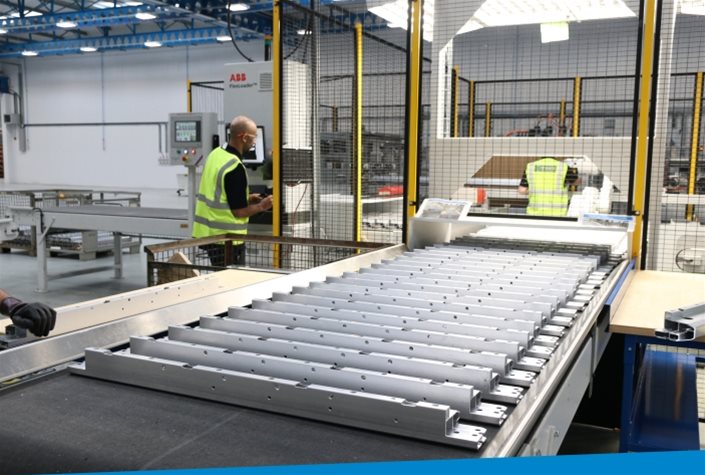
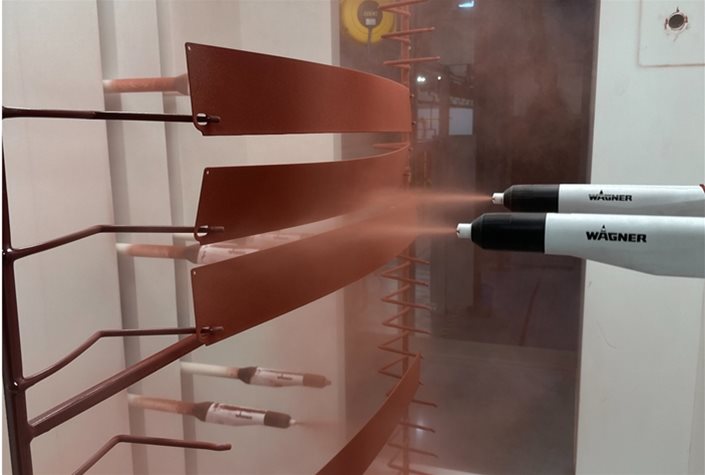
BCW uses advanced die casting workflows that eliminate unnecessary machining and shorten overall production cycles while reducing material waste. Reducing emissions can also be achieved by greater investment in machining that cuts down human error and the need for rework. Smarter jigs, fixtures and automated surface treatments all go a long way to improving ESG performance.
Procurement teams want to be looking at the suppliers who’ve invested in Industry 4.0 casting technologies. These suppliers are perfectly positioned to support evermore stringent ESG frameworks and carbon mandates.
Choosing the Right Casting Partner for Your ESG Journey
As we said right at the top of this piece, ESG and emissions are both procurement priorities and no longer a nice-to-have.
The ability to trace and reduce emissions across casting machining is essential as regulatory demands become more scrutinising.
Suppliers such as BCW Engineering are leading the way by embedding carbon tracking and sustainable machining into every project.