5 Automotive Engineering Trends to Watch in 2026
The race to 2026 has already begun for automotive engineers and procurement teams. Both of these key automotive departments are navigating some of the most disruptive shifts in vehicle programming strategy seen in decades, and this looks set to continue into the new year.
For engineers and procurers, it’s the perfect storm. Not only are stricter emissions targets at the forefront of every decision, but there is also greater pressure to reduce programme timelines and costs. Couple all that with the demand for lighter components, and you’re at a stage where innovation is now an operational necessity.
This article explores five automotive engineering trends that will define how parts are created in 2026.
These trends include:
- Greater use of magnesium alloys for lightweight applications.
- Gigacastings’ growing adoption by OEMs.
- What thixomolding and semi-solid casting mean for parts.
- How design for manufacturing (DFM) is becoming simulation-led.
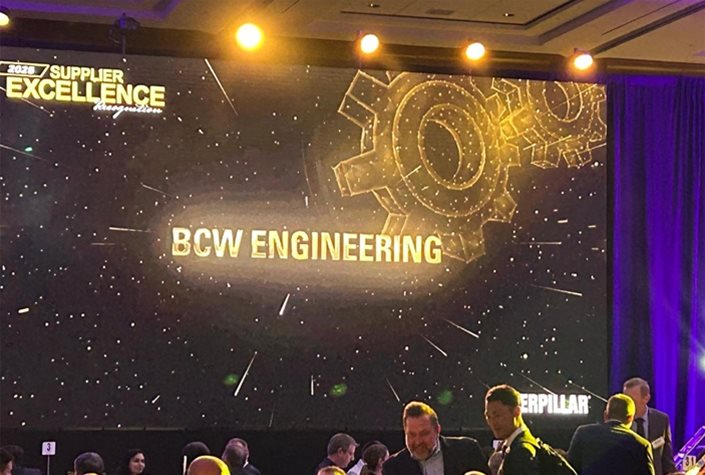
- The rise of integrated manufacturing, by firms such as BCW Engineering, has become a competitive advantage.
These are just a few of the trends expected in 2026 and should be taken note of by those in the industry.
1. Why Magnesium Is Back in the Spotlight
Magnesium is returning as a serious contender for lightweight automotive applications.
The use of magnesium in the creation of automotive car parts has reduced in recent years due to issues around flammability, gas absorption, porosity, dimensional stability and hot tearing. The metal faced long-term durability challenges, which hindered its widespread adoption in the automotive industry and had been replaced by a mixture of aluminium die castings and aluminium extrusion processes.
Fast forward to today, however, and magnesium is making a significant return to the production lines of OEMs and Tier 1s, and will continue to do so in 2026.
The reason for its reintroduction is its ability to offer significant weight reductions compared to aluminium. In some cases, these reductions can be up to 30% which aids better performance and fuel economy improvements.
The aforementioned issues surrounding porosity and stability have improved due to improved casting techniques, and magnesium is now a far more viable metal for safety-critical parts.
Alloying magnesium by combining it with other elements such as aluminium, zinc, and manganese to create AZ91D and AM60B has also helped turn negatives into positives. Both of these alloys have been shown to have far greater corrosion resistance and mechanical performance – two issues that dogged pure magnesium up until now.
Alloying has increased confidence among engineers that this is a viable option. Further confidence has come from case studies showing the successful replacement of traditional aluminium parts in seat frames, front end carriers, IP beams and transmission housings.
Looking at the bigger picture, the greater adoption of magnesium is partly down to its alignment with net-zero ambitions. Its lighter weight makes it a suitable choice for reducing the weight of vehicles and bringing down the overall emissions of OEM’s and Tier 1’s who need to continually demonstrate reduced CO2e both on the production floor and downstream.
Expect to see Magnesium adoption become one of many automotive engineering trends in 2026 as more sustainable techniques of production are developed, such as seawater electrolysis, and OEMs push for more sustainable platforms.
2. What Gigacasting Means for Vehicle Platforms
More and more OEMs are starting to rethink how structural components are designed and who supplies them.
Gigacasting has been an increasingly popular manufacturing process, especially among companies such as Tesla. This increased adoption has influenced peers such as Volvo and many other chinese OEM’s to consider large structural casting in their future vehicle models.
This manufacturing method involves consolidating components into one high-pressure cast. The multitude of benefits that arise from Gigacasting is why it is so admired by the companies mentioned.
As expected, part consolidation on this scale significantly reduces welding and, maybe more importantly, the manufacturing time at the OEM. Cost per part is also drastically reduced because fewer pieces are being produced during the casting process.
The models in the casting process can also be used more quickly, as the lack of tool and weld point validation spots means programme delivery cycles can be shortened.
And finally, the part that is produced is far more rigid due to a lack of welding and joint spots, both of which can contribute to instability.
So, how does this admiration for Gigacasting affect procurement teams and engineers?
For engineers, design must account for large-format casting constraints, including:
- Die size
- Thermal behaviour
- Fill control
The selection of suppliers becomes critical for procurement leads. Gigacast parts require cutting-edge die casting machines, tooling and the ability to carry out real-time simulations on large gigacastings.
If Gigacasting adoption becomes greater in 2026, as is expected, it’s likely this will trigger a demand among procurers and engineers for vertically integrated partners who can manage casting, CNC machining, surface treatments, and tolerance validation all under one roof.
3. The Rise of Thixomolding and Semi-Solid Casting
Greater strength and reduced work are just two factors driving the adoption of semi-solid processes.
The first trend mentioned was the greater adoption of magnesium as a raw material for creating car parts. Well, one of the methods that turns magnesium alloy into car parts is thixomolding.
Thixomolding uses semi-solid metal to create magnesium components. A semi-solid slurry of magnesium alloy is injected into a cast to help create thin-walled parts that require immense precision.
The semi-solid nature of the alloy used during the thixomolding method reduces turbulence that can lead to internal voids within the final part. In traditional die casting, speed and volume are the priorities, both of which can lead to parts with incorrect dimensions and less rigidity. This new, more precise method supports near-net shape manufacturing, which cuts down post-machining.
Thixomolding will be increasingly appealing to engineers in 2026 as they look to explore new materials, such as magnesium. This new method amplifies the qualities of these new materials because it offers better control over wall thickness and flow.
On the procurement side of the topic, thixomolding reduces material waste and total energy consumption, both of which are large contributors to those net-zero targets.
For semi-solid casting to be truly effective during the production process, there needs to be greater emphasis placed on tooling design and process simulation. This need makes engaging with a supplier as early as possible extremely important.
Thixomolding usage will be one of the more prominent automotive engineering trends in 2026. In particular, for small structural and EV-related parts, where weight needs to be balanced with cycle time.
4. How Simulation Is Redefining Tolerance and Tooling
Design for Manufacture (DFM) is becoming situation-led.
Everyone in automotive manufacturing wants predictability and programmes with as little risk as possible. None more so than engineers and procurement leads.
This need for predictability has seen an increase in simulation adoption. By looking ahead of the manufacturing process using simulation, teams can reduce late-stage design changes by predicting defects in parts before tooling begins.
Simulation can help engineers model:
- Cooling profiles
- Porosity
- Shrinkage
- Stress points
- Thermal flow
Weeks of rework can be removed during the tooling phase by modelling all these often riskier features of the casting process. As well as that, simulation-led DFM offers better dimensional accuracy for large-format parts such as battery trays in EVs.
This improved accuracy is particularly valuable when it comes to managing tight tolerances. Tolerance control during casting and machining can now be refined digitally to improve consistency.
This emphasis on digital-first validation is now expected by OEMs who want their chosen supplier to carry out digital tooling before production begins. This need becomes more acute for fast-track programmes that aren’t afforded the luxury of testing and redesigns that typical programmes may have.
Ultimately, digital tooling offers that predictability so sought after by engineers and procurement leads. It highlights the issues that can be resolved before they happen, creating predictable, stable timelines that support de-risk planning.
In 2026, expect to see an increased adoption of simulation among engineers who will relish the flexibility to test new vehicle architecture designs without committing to the costly, physical tooling process early on.
5. Why Integrated Machining and Casting Is a Competitive Edge
From speed to sustainability, vertical integration is shaping the next generation of suppliers.
No matter what angle you look at it from, integrated machining and casting is becoming the de facto choice for OEMs and Tier 1s because of how holistically it affects programme delivery for the better.
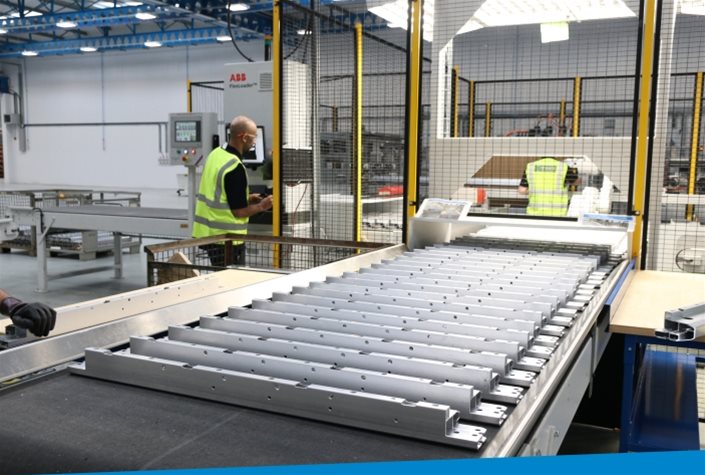
Casting and machining everything from one production line reduces how many engineers need to be involved in handling the part, as well as the number of suppliers who need to transfer it. These logistical factors alone can help to drastically reduce lead time.
A partner that has all the key components in-house can handle fast-moving projects which have shorter delivery windows without compromising on part quality. With everything being taken care of under one roof, feedback loops and quality control can be done without engineers needing to wait days or weeks for responses, a fact that non-integrated suppliers have to live with.
Process aside, net-zero targets and sustainability goals are now key factors in supplier decision-making for Tier 1s and OEMs who need to measure the CO2e of every part they procure from a supplier. Integration supports traceability and carbon tracking far more easily, as manufacturers only need to attain their scope 3 figures from a single source.
Manufacturers further reduce the risk of excessive embedded emissions by choosing to onshore their supplier relationships. A UK-based vertically integrated supplier is subject to the targets and goals that were just mentioned. Sustainability will be built into the process rather than bolted on.
Integrated manufacturing, then, is a wholly positive choice, whichever lens you examine it through. Suppliers that wish to retain that competitive advantage must invest in true integration as we head into 2026.
Future-Ready Starts Now
Adaptability will be the foundation of future-ready engineering in 2026.
The automotive engineering trends shaping 2026 demand greater collaboration, not just supplier capability. Teams which embrace these trends in the next 12-18 months will see benefits across the board.